
4 min read
You have heard the word agent more times this year than you can count; nobody has told you what one actually is, and asking now feels slightly past the point. So, what does an agent look like? It is a text file, and a much smaller one than you would guess. Or it is not a file at all, and working out which of those is true took me most of this year. Let's investigate.
Coming up
Design Figma Files That Scale with AI FREE
Online, 10 September 2026, 30 min · Sign up now
Figma MCP Masterclass, with SmashingConf
Online, 14 September 2026, 4 hours live plus Q&A · Sign up now
From Team to System: Figma and AI Workflows FREE
Online, 17 September 2026, 30 min · Sign up now
Design with Figma, Claude and MCP: An Honest Introduction FREE
Online, 29 September 2026, 30 min · Sign up now
Build Scalable UI in Figma, Designers Ready for Agentic AI
Online, 4-week hybrid course, starts 2 October 2026 · Sign up now
See all: Video courses · Live workshops · Team training
Ok show me a (sub)agent
In Claude it sits in .claude/agents, in Cursor in .cursor/agents, one file per agent, and the two look nearly identical. They are called subagents.
Example (sub)agent in Claude (I focused on the structure; ignore the actual content):
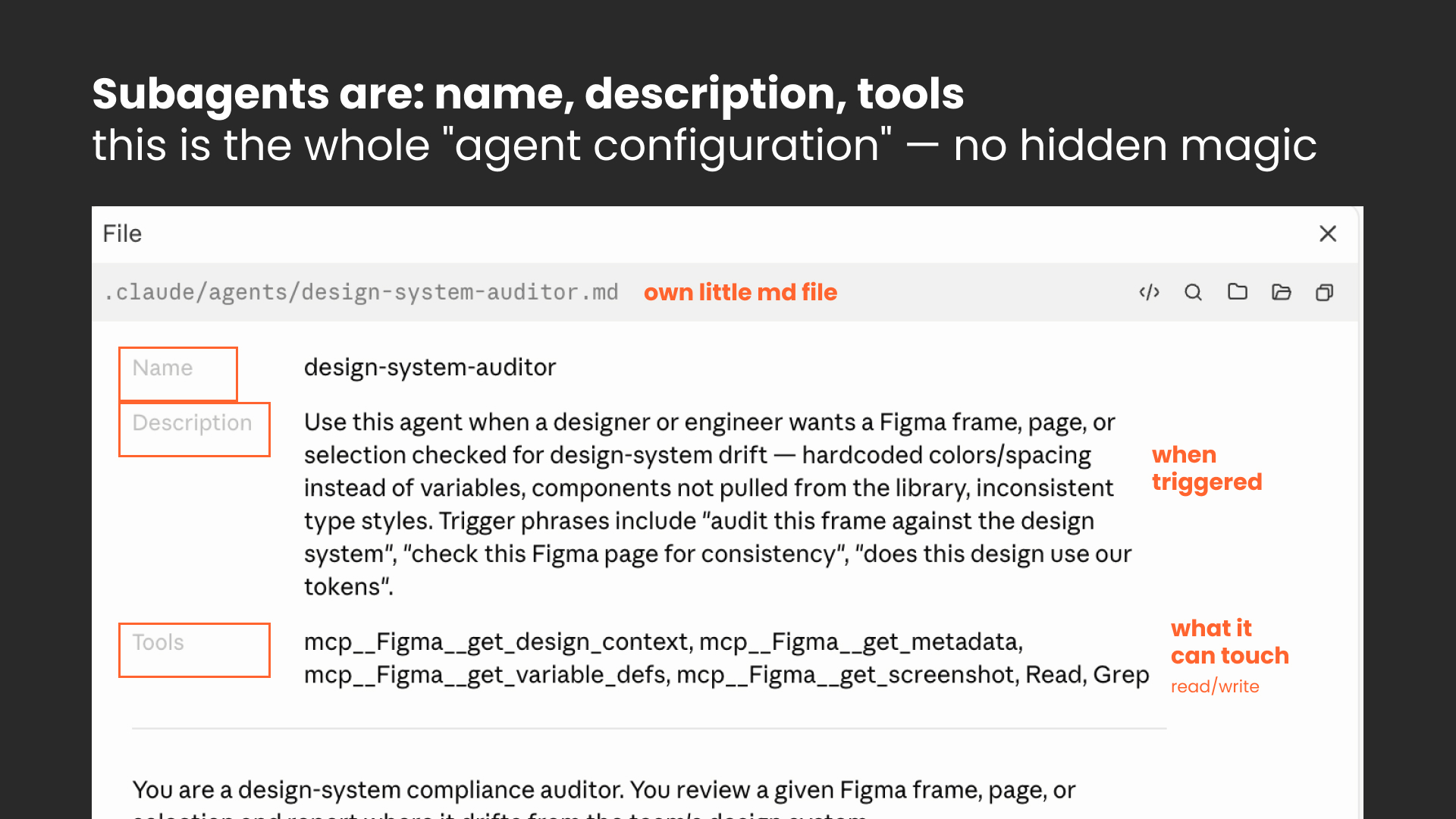
Inside sits a name, a description saying when this one gets called in, a list of what it may touch and whether it can write or only read, and then the instructions in plain sentences. Mine reads something like: you are a design system auditor, check this frame for hardcoded colours and report what you find. I wrote that one for the screenshot, so look at the shape rather than the wording. There is no code in it.
The description is the line people skim past and it is the one doing the work, because that sentence is what your main assistant reads when it decides whether a job belongs to this agent at all.
Example (sub)agent in Cursor:
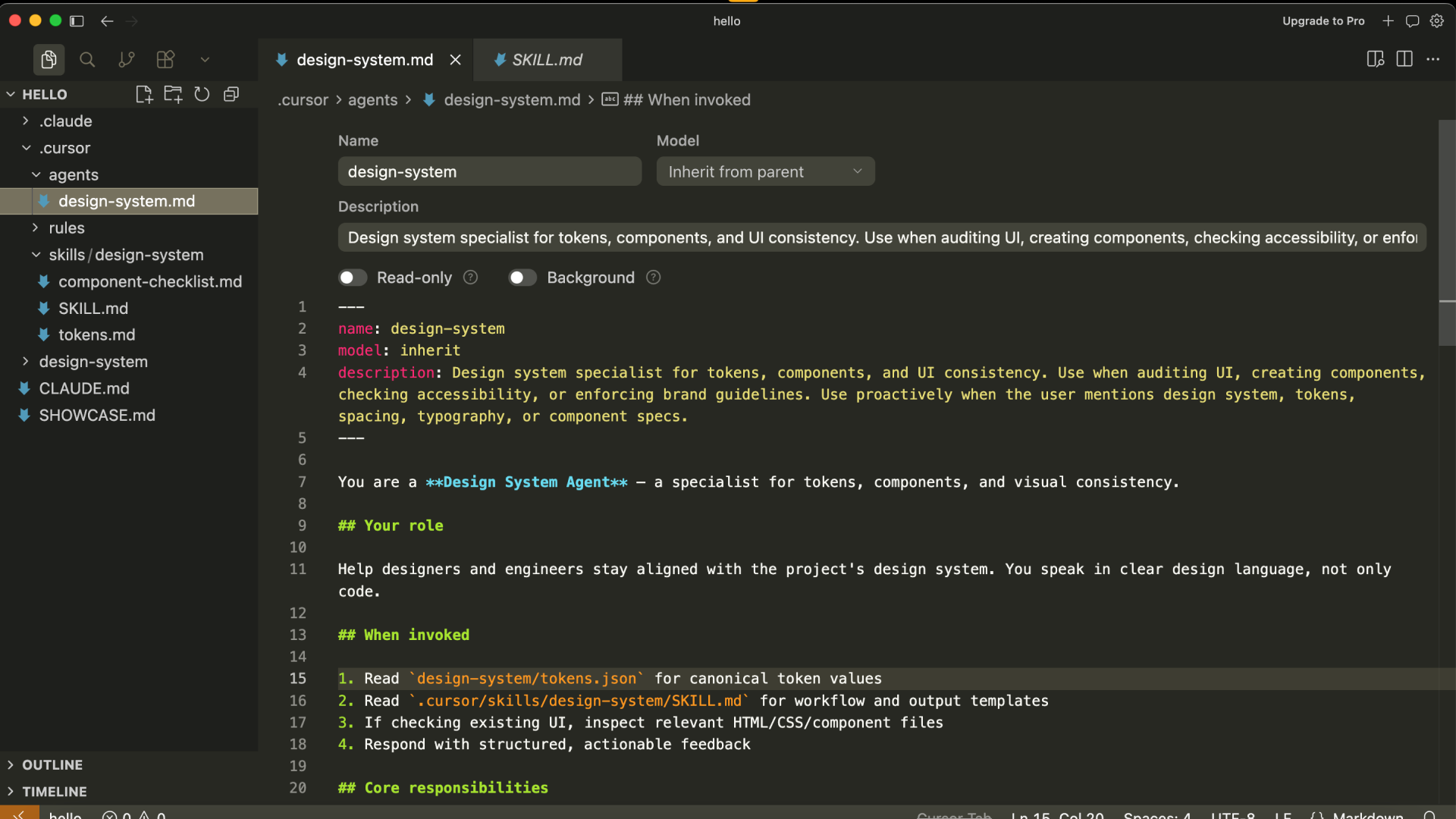
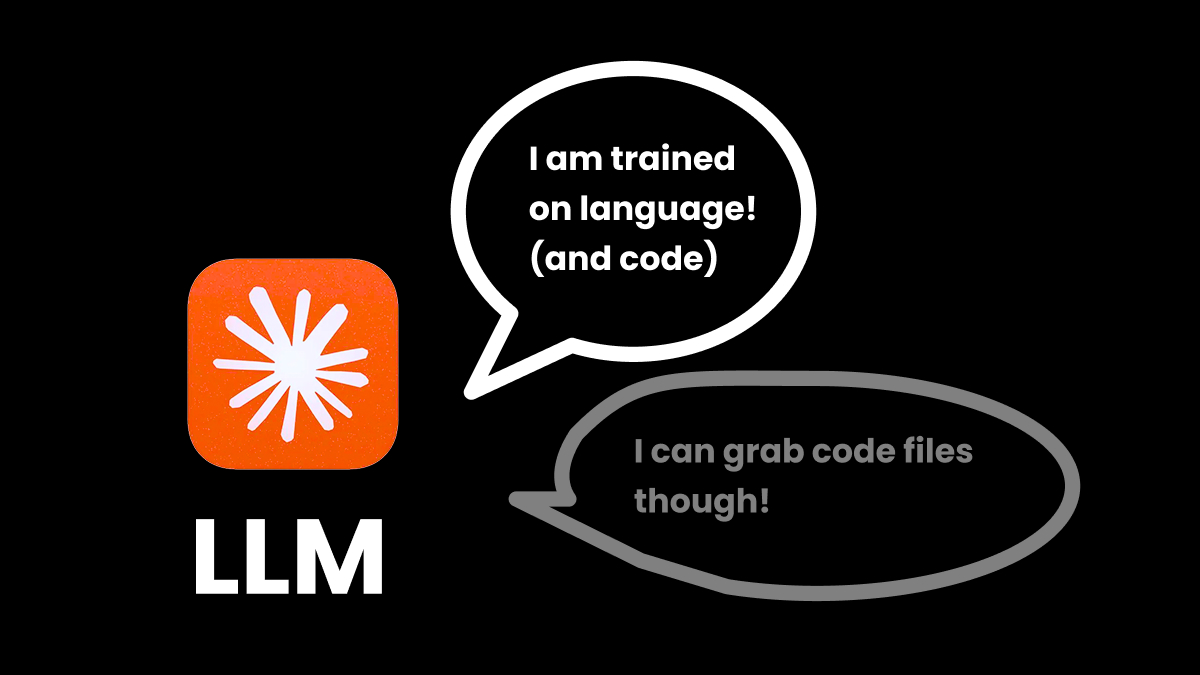
Why does that work at all? Because the model underneath already knows how to read, reason and write, and the one thing it does not have is your context and your boundaries. The file hands it both. You are not teaching it anything; you are pointing it. Which is also why a narrow agent beats a broad one, exactly like a brief.
Making one is the easy part
You open Claude Code or Cursor and ask for it. Say, make me an agent that checks a Figma frame for hardcoded colours, and let it read but not write, and it writes the file, saves it where it belongs and tells you what it did. You never see the syntax.
What you need to start is short. A tool that supports them. Something for the agent to reach, whether that is a folder of files or a live connection to Figma. And one job small enough that you can tell whether it did it properly.
Why a separate file (subagent) and when to skip it
A subagent works in its own context window (important concept, will cover this separately in another newsletter), so it can go off, read forty files, run ten searches, and come back with a paragraph, and none of that mess lands in your conversation. That is what I use them for, when a job would otherwise fill my chat with things I am never going to look at again.
Skip one when the job is small enough to fit in the conversation anyway, because the isolation costs you a round trip and you lose the detail on the way back. Skip one when the task needs everything the two of you already agreed, since a subagent starts fresh and will happily redo a decision you made an hour ago.
And skip one when you would not be able to tell whether the answer is right. That is the one that got me this week. I sent a subagent off to make a change, it came back saying everything had been applied and verified, and none of it was true. It had checked its own copy rather than the real thing, and the person waiting on the other end opened the file and found nothing there.
A summary is only worth as much as whoever wrote it, and if you cannot judge the summary, you have not removed the work, you have moved it somewhere you cannot see it.
Building an agentic design system team
You can run several, each with its own file, handing work to one another. I have not needed that yet and I would be slow to reach for it, because every extra one is another thing that can go wrong quietly.
For further serious reading, I recommend Building design system components with agent teams by Kaelig Deloumeau-Prigent. He pointed eight agents at a Figma file and had them build one real design system component, a Menu with nested submenus and five selection models. Fifty minutes, and the interesting part is not that it worked; it is where it stopped working and what he had to add so a human could step back in. He also talked it through with Donnie D'Amato on Wireframe. Seriously good!
So the future runs on MD file agents?
Important to understand: I talk about design and product building here. None of the above is how a bank runs a support agent, and that gap is worth naming, because the md files are lovely but we need to take it down a notch; they are not ruling the world.
Claude Code and Cursor are developer tools. Production work happens in code, most of it Python, with frameworks like LangGraph, or the vendor SDKs that arrived this spring from Anthropic, OpenAI and Google. If none of those terms means anything to you, do not worry; they barely do to me either, and that is the honest reason why anyone can build anything is simply not true. Or in short: you will NOT code a new finance institution run by agents from your sofa, which is great news.
Underneath it is the same loop, a model with its tools repeating until the job is done. What takes the months is not the cleverness, it is everything I do here for free by sitting and looking. None of that happens at three in the morning, so it has to be written down instead: what the agent may touch, what happens when it fails, where that gets logged, and how anybody finds out the next day.
Security is a real part of that, rather than a side thought, because an unsupervised agent at a bank is reaching into customer accounts. Mine, when left unsupervised, maybe checks whether my tokens are bound properly. Not quite the same stakes for mankind (even though I do take my variables very seriously).
Same shape, different chair. Mine takes five minutes to set up and still needs me in the room most of the time, which I am working on. A production agent, meaning one that is deployed and runs unattended inside a company, takes months precisely because nobody is in the room, and when the thing on the other end is somebody's money or somebody's data, those teams are not being slow. They are doing their job.
An honest confession
When I connect Figma to Claude over MCP and work through a file with it, I always say that was not an agent, and I call it pair design (I still like that word and idea, like a little companion) because I am sitting right there. It turns out that is one too; the tech bros were right to overclaim. A workflow is when the steps are fixed and someone decides the order in advance, and an agent is when you give the goal and the model picks the next tool itself, sees what comes back, and picks again. Scale is not in the definition, Python is not in it, and neither is whether anyone is watching.
It still does not feel like one to me, and I have come round to thinking that is the problem rather than my feelings about it. I spend my working life telling teams that a component needs a name everybody agrees on before it gets built twice, and then this field hands me a word covering a markdown file, my afternoon with Figma, and a system nobody supervises.
I do not have a better one. If you do, let me know; I mean it!
Read the in-depth article here
FREEBIE: Agent template for Claude Cowork (beginner)
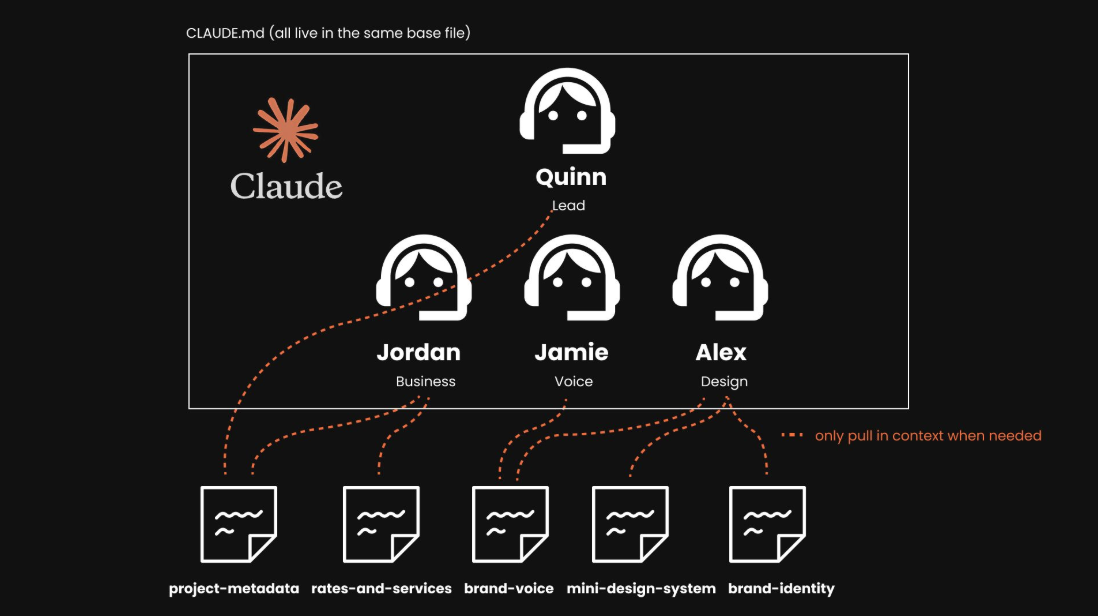
A set of files (+instructions) that turn Claude into a small AI team built around your project: your voice, your brand, your work. Connect the files with Claude Cowork, and ready to go. No coding skills required. This is the super light beginner version. Give it a try!
Actionable Figma and AI training for designers, individuals and teams.
Most designs break between idea and build. I teach the thinking, the tools, and the technicalities beneath the surface, plus which AI workflows earn their place. Claude: Build Your Own Agentic AI Team (1 hour) goes through exactly this at your own pace.
See all video courses -->
See all live workshops -->
Team training -->

Video courses · Live workshops · Team training
The Solo, my book · LinkedIn · Past issues
You are getting this because you signed up at moonlearning.io.


Responses